Seucirty Best Practices
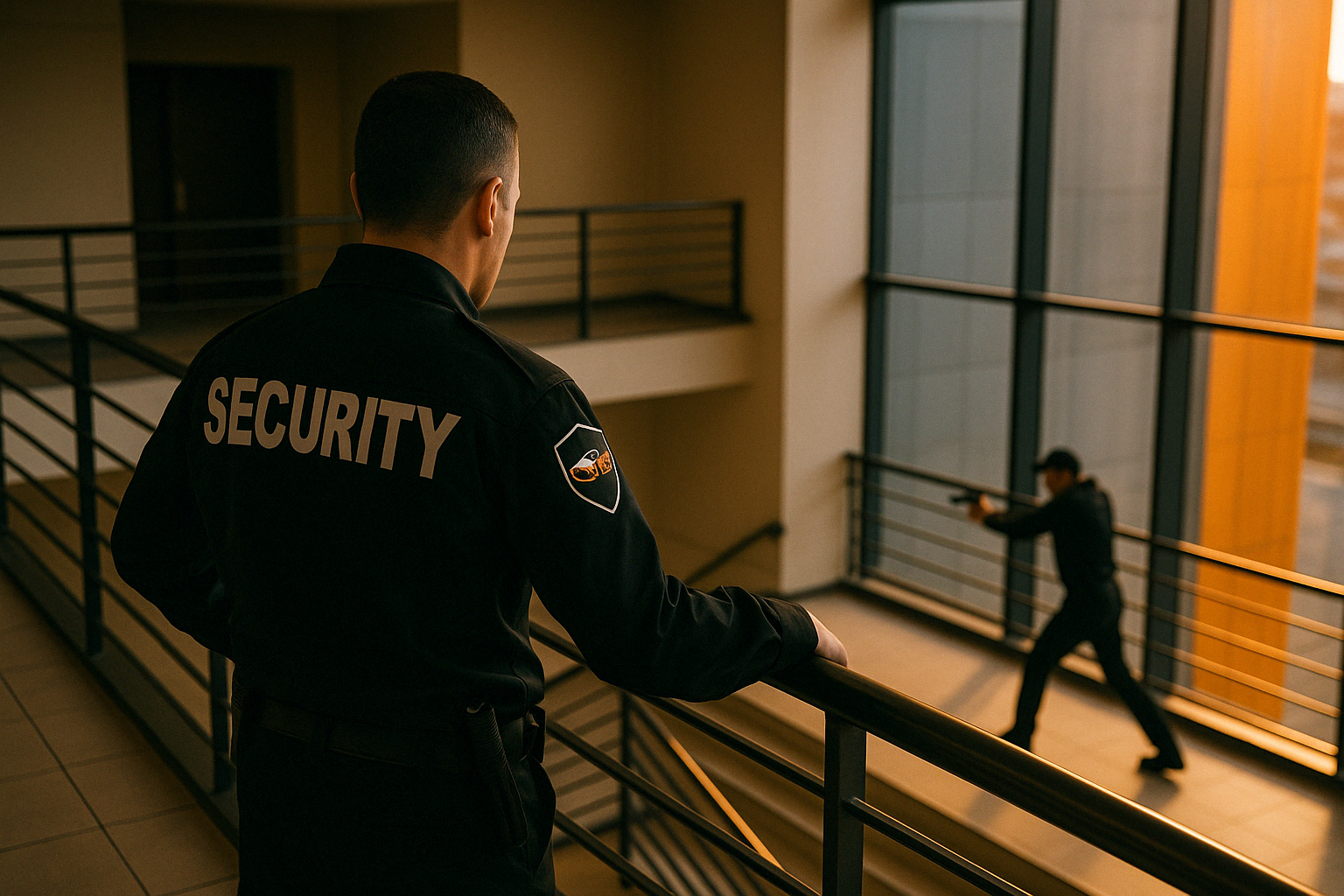
Security Officer Responsibilities During Active Shooter Incidents
Introduction
In the context of contemporary emergency management, the responsibilities of security personnel during active shooter events are multidimensional and mission-critical. Security officers serve not only as first responders but as facilitators of emergency protocols and collaborators in life-saving operations. Because active shooter incidents often unfold in under 15 minutes, their compressed timeline demands proactive preparedness, situational acuity, and rapid operational judgment.
This article provides an academically grounded and operationally relevant overview of best practices that security professionals should apply before, during, and after active shooter events. Emphasis is placed on institutional training, tactical readiness, situational analysis, interagency coordination, and operational recovery. Understanding these roles is essential not only for practitioners but also for students of security studies, criminal justice, and emergency management who are preparing to enter the field.
1. Preparedness Through Training and Site Familiarity
Preparation is a cornerstone of effective response. Security professionals must undergo rigorous training grounded in evidence-based practices and adaptive, scenario-driven exercises. This training should be continuous and multidisciplinary in nature, integrating theoretical knowledge with physical drills.
Key preparation strategies include:
-
Mastery of the “Run, Hide, Fight” paradigm and its application in diverse built environments such as schools, offices, industrial facilities, and healthcare settings.
-
Recurrent walkthroughs of the facility to identify evacuation routes, secure lockdown zones, and areas vulnerable to entrapment.
-
Participation in interdisciplinary simulations and exercises alongside law enforcement, EMS personnel, and emergency planners.
-
Familiarity with emergency equipment including automated external defibrillators (AEDs), trauma response kits, duress alarm systems, emergency lighting, and lockdown technology.
-
Development of leadership communication skills, allowing officers to direct panicked individuals with authority, clarity, and empathy.
Psychological readiness is equally essential. Officers must train themselves to maintain situational composure, regulate stress responses, and exhibit confidence under high duress scenarios. This can be reinforced through stress inoculation training and cognitive resilience exercises.
2. Situational Awareness and Behavioral Threat Recognition
Proactive threat identification is an evolving cornerstone of modern security practice. Maintaining an informed, vigilant stance can significantly reduce the likelihood of escalation. Officers must receive structured instruction in behavioral threat analysis, and they should be well-versed in local and national threat reporting protocols.
Common pre-incident indicators include:
-
Repeated loitering or unauthorized surveillance of ingress/egress points or access control nodes.
-
Sudden, erratic, or threatening behavior directed toward staff, visitors, or fellow patrons.
-
Concealment of body shape under large coats or bags inappropriately suited for the environment or climate.
-
Expressions of violence, hopelessness, or revenge, especially on social media or in direct communications.
Officers should report such behaviors through established channels, ensure they are documented in detail, and collaborate with organizational behavioral threat assessment teams when warranted. Documentation should include time-stamped logs, environmental context, involved individuals, and any supporting digital evidence.
3. Tactical Response During the Event
When an active shooter event unfolds, the security officer’s role transitions to a tactical responder responsible for initiating protective actions based on the severity, immediacy, and localization of the threat. Officers must act within the scope of their training, capabilities, and institutional policies.
Response actions may include:
-
Alert and notification: Initiate facility-wide alerts via intercom, mass notification software, or panic systems. Communicate the presence of a threat clearly and concisely, avoiding ambiguous language.
-
Evacuation coordination: If egress is safe, guide occupants toward designated exits, while remaining vigilant for potential ambush points or secondary threats.
-
Shelter reinforcement: Assist individuals in securing shelter-in-place zones, turning off lights, silencing devices, and using barricades to fortify doors.
-
Self-preservation and discretion: Officers who are not armed and trained in tactical engagement should avoid direct confrontation with the assailant. Their role is to protect and preserve life, not to act offensively.
-
Continuous assessment: Situations evolve rapidly. Officers must adapt their decisions based on changes in shooter location, law enforcement arrival, and evolving tactical conditions.
Proper execution of these responsibilities demands pre-assigned roles and practiced muscle memory. Training should simulate auditory confusion, limited visibility, and crowded spaces to enhance real-world applicability.
4. Interagency Communication and Law Enforcement Integration
During an active shooter response, security officers must seamlessly transition into roles that support law enforcement operations. This requires prior coordination, clear communication protocols, and mutual understanding of jurisdictional boundaries.
Critical support roles include:
-
Real-time intelligence sharing: Relay accurate, up-to-the-minute descriptions of the perpetrator(s), their movement patterns, weapon types, and known casualties.
-
Infrastructure guidance: Provide responding units with building maps, security camera access, floor-by-floor familiarity, and access control codes.
-
Command integration: Identify and coordinate with the designated incident command structure (ICS), ensuring the officer’s actions align with the strategic response plan.
-
Operational deconfliction: Maintain high visibility, wear identification vests, and follow law enforcement instructions precisely. Avoid sudden movements and comply with detainment if ordered for safety verification.
Officers should also support logistical needs, such as guiding K-9 units, assisting SWAT staging, or facilitating media blackout zones to protect operational integrity.
5. Post-Incident Recovery and Operational Continuity
The resolution of an active shooter event does not conclude the responsibilities of security officers. Recovery operations must be handled with strategic sensitivity and procedural rigor. Officers play a central role in transitioning the environment from crisis to controlled recovery.
Responsibilities during recovery may include:
-
Perimeter and evidence protection: Secure entry and exit points, preserve surveillance logs, and cordon off areas that may be part of a crime scene.
-
Triage support: Aid emergency medical services in identifying the injured, prioritizing care, and navigating through secured spaces.
-
Psychological first aid: Offer grounded, reassuring communication to survivors and assist in reuniting separated individuals, including facilitating family or caregiver access.
-
Debrief participation: Contribute to organizational reviews of the incident by providing detailed timelines, communication logs, and first-hand observations.
-
Policy feedback loop: Actively engage in updating emergency action plans (EAPs) and continuity of operations plans (COOPs) based on the lessons learned.
Post-incident wellness support for officers is critical. Institutions should offer counseling, peer support programs, and stress debriefings to ensure emotional health and mitigate the risk of burnout or post-traumatic stress.
Conclusion
Security officers are integral to the layered defense strategy required to manage active shooter incidents effectively. Their contributions span situational analysis, tactical readiness, operational coordination, and post-crisis stabilization. The ability to act with speed, accuracy, and empathy under extreme conditions defines the professionalism of modern security personnel.
For students and professionals within the security, emergency management, and criminal justice disciplines, understanding and internalizing these principles is essential. By investing in evidence-based training, fostering interagency partnerships, and cultivating psychological resilience, security professionals can elevate their preparedness and play a transformative role in crisis prevention and response. In a world where the threat landscape evolves constantly, it is this holistic approach that ensures both the safety of individuals and the integrity of institutions.
Author
Lander Compton
Creation Date
12:45 AM at 4/16/2025
Last Updated
4:52 AM at 4/16/2025